


Coral Restoration in Tulum, Mexico


Protecting the Mesoamerican Reef
Tulum sits along the Mesoamerican Reef, the second-largest coral reef system in the world. This reef is not only a breathtaking natural attraction for divers and snorkelers, but also a vital ecosystem that protects coastlines, supports marine life, and sustains local communities.
In recent decades, coral reefs in the Mexican Caribbean have faced serious threats, including coral bleaching, pollution, coastal development, hurricanes, and rising sea temperatures. In response, several organizations and community initiatives in and around Tulum are actively working on coral restoration projects to help reefs recover and become more resilient.

Why Coral Reefs Matter
Coral reefs play a critical role in both the environment and the local economy:
Marine biodiversity: Reefs provide shelter, food, and breeding grounds for thousands of marine species.
Coastal protection: Healthy reefs reduce wave energy, helping prevent beach erosion and storm damage.
Tourism & livelihoods: Diving, snorkeling, and fishing in Tulum depend on thriving reef ecosystems.
Climate resilience: Strong, diverse reefs are better able to recover from bleaching and extreme weather events.

Mycetophillya
Coral Restoration Efforts in Tulum
Coral Nurseries
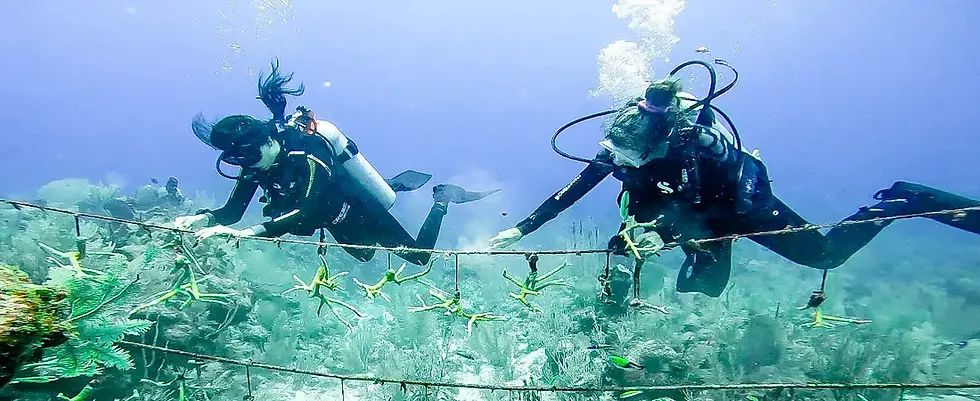
One of the most common restoration techniques used in Tulum involves underwater coral nurseries. Small coral fragments—often broken naturally by storms—are collected and grown in controlled underwater structures. Once mature, these corals are transplanted back onto degraded reef areas.
Coral Transplantation
After several months of growth, healthy coral colonies are carefully attached to selected reef sites. This process helps increase live coral cover, restore reef structure, and create habitat for fish and other marine organisms.
Genetic Diversity & Resilience
Modern restoration projects focus on maintaining genetic diversity, selecting corals that show higher resistance to heat stress and disease. This improves the reef’s long-term survival in a changing climate.

Organizations Supporting Reef Recovery
Several NGOs and community groups are involved in coral conservation near Tulum, often working in collaboration with scientists, dive professionals, and local businesses. These efforts are part of a broader initiative to protect the Mexican Caribbean reefs, including nearby areas like Akumal, Puerto Morelos, and Cozumel.
Many projects also include education and awareness programs, helping visitors and locals understand how daily actions—such as sunscreen choice, waste reduction, and responsible diving—impact reef health.

How Visitors Can Support Coral Restoration
If you’re visiting Tulum, you can contribute to reef protection by:
Choosing eco-responsible dive and snorkel operators
Using reef-safe sunscreen
Avoiding contact with corals while diving or snorkeling
Supporting or donating to local conservation programs
Participating in coral restoration experiences or workshops, when available

A Shared Responsibility
Coral restoration in Tulum is not just about repairing damaged reefs—it’s about building a sustainable future where tourism, conservation, and local communities thrive together. With continued collaboration and responsible travel, the reefs of the Mexican Caribbean can remain vibrant for generations to come.

Tulum Reef Regeneration Project — Oceanus A.C. + Partners
One of the main ongoing restoration efforts in the Tulum area is led by Oceanus, A.C., working to help the Caribbean reef system recover and build resilience. Their program includes:
Coral nurseries: Installation of multiple underwater nurseries to grow coral fragments before transplanting them back onto the reef.
Transplantation: Hundreds of coral fragments and colonies are transplanted to selected sites in the Tulum reef area to boost live coral cover and diversity.
Resilience and biodiversity: Focus on restoring function as well as structure to degraded reef areas.

Akumal Ecological Center (CEA) — Regional Work Nearby
Although centered in Akumal (just north of Tulum), the CEA runs ongoing reef restoration programs that attract participation from volunteers (including divers and conservationists) to:
Maintain coral nurseries
Transplant corals
Monitor reef recovery
These programs sometimes involve groups from Tulum and the wider Riviera Maya.


Comments